
Passing 10th is an important milestone, but deciding what to do next can be confusing. Students have several options after 10th, including 11th and 12th, diploma courses, vocational education, computer courses and other skill-based programs.
The right choice depends on your interests, strengths, career goals and learning preferences. There is no single best career option after 10th that works for every student.
In this guide, we will discuss career guidance after 10th pass, different career options, courses students can consider and how to choose the right path for the future.
What to Do After 10th?
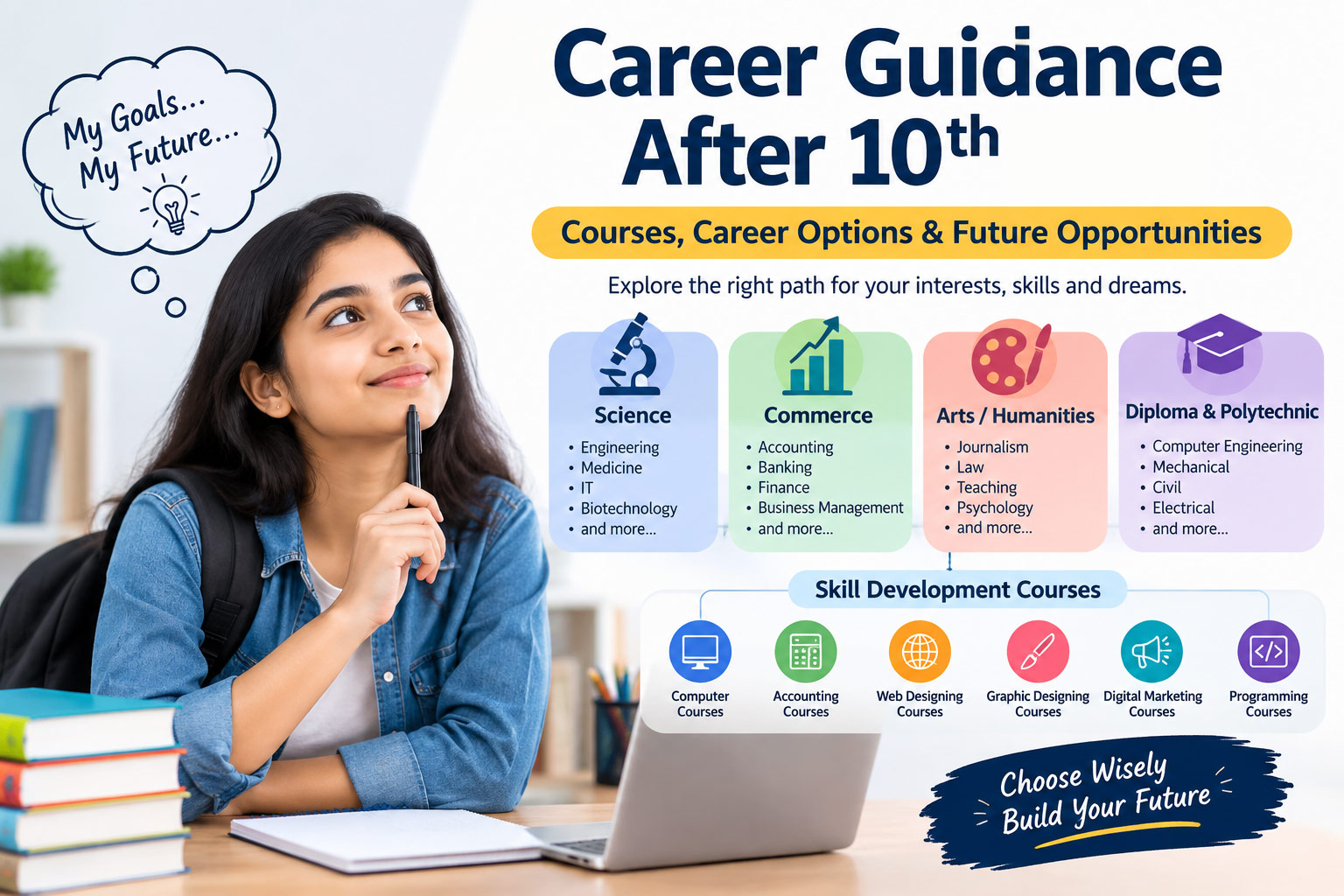
After passing 10th, students can consider several educational and career paths:
- Continue with 11th and 12th
- Choose Science, Commerce or Arts/Humanities
- Join a Diploma or Polytechnic course
- Explore vocational courses
- Learn computer and digital skills
- Choose job-oriented or skill-based courses
- Develop professional skills alongside regular education
Before choosing a course, students should understand their interests and career goals rather than selecting a course simply because it is popular.
Career Options After 10th
There are many career options after 10th. The most suitable option depends on what you enjoy learning and the type of career you want to build.
1. Science Stream
Students interested in science, mathematics, technology, medicine or engineering can consider the Science stream after 10th.
It can lead towards careers and higher education in areas such as:
- Engineering
- Medicine
- Computer Science
- Information Technology
- Pharmacy
- Biotechnology
- Research
- Other technical fields
Students should understand the subjects involved and future eligibility requirements before selecting this stream.
2. Commerce Stream
Commerce can be a suitable choice for students interested in business, accounting, banking, finance and management.
Possible career areas include:
- Accounting
- Banking
- Finance
- Taxation
- Business Management
- Entrepreneurship
- Financial Services
Students can also build practical skills such as Tally Prime with GST and Advanced Excel alongside their academic education.
3. Arts / Humanities
Arts or Humanities can provide opportunities in a wide range of fields.
Students may explore careers related to:
- Journalism
- Law
- Teaching
- Psychology
- Social Sciences
- Public Administration
- Media
- Communication
- Creative fields
The Arts stream should not be considered only as an alternative to Science or Commerce. It can be a strong choice for students whose interests and career plans match these fields.
Diploma and Polytechnic Courses After 10th
Students who prefer technical and practical education can consider diploma or polytechnic programs after 10th.
Depending on the institute and eligibility requirements, options may include:
- Computer Engineering
- Information Technology
- Mechanical Engineering
- Civil Engineering
- Electrical Engineering
- Electronics
- Automobile Engineering
Diploma programs can provide technical knowledge and practical exposure. Students should compare the curriculum, admission requirements, duration and future education opportunities before selecting a course.
Best Courses After 10th for Skill Development
Along with formal education, students can learn practical skills that may be useful for their future studies and careers.
Some popular skill areas include:
Computer Courses
Computer skills are useful across almost every modern industry. Students can learn:
- Basic Computer Skills
- MS Office
- MS-CIT
- Advanced Excel
- Internet and Digital Skills
- AI and Digital Tools
Accounting Courses
Students interested in accounting and business can consider:
- Tally Prime
- GST
- Advanced Excel
- Financial Accounting
Web Designing Courses
Students interested in websites and technology can start with:
- HTML
- CSS
- WordPress
- Web Design Fundamentals
- UI/UX basics
Graphic Designing Courses
Creative students can explore:
- Graphic Design
- Digital Design
- Image Editing
- Social Media Design
- Creative Content
Digital Marketing Courses
Students interested in online business and marketing can learn about:
- Search Engine Optimization
- Social Media Marketing
- Content Marketing
- Online Advertising
- Digital Branding
- Analytics
Programming Courses
Students interested in software and technology can explore programming fundamentals and languages such as:
- Python
- PHP
- JavaScript
- Other programming technologies
The most important thing is to choose a skill based on your interest and career direction instead of trying to learn everything at once.
Job-Oriented Courses After 10th
Many students search for job-oriented courses after 10th because they want to develop practical skills that can support future employment.
Some areas worth exploring include:
- Computer Applications
- Accounting
- Digital Marketing
- Graphic Designing
- Web Designing
- Programming
- Video Editing
- Office Productivity
- Data and Excel Skills
However, students should remember that completing a short course does not automatically guarantee a job. Career opportunities depend on skills, education, practical experience, communication ability and the requirements of the employer.
Therefore, students should focus on building real skills and practical experience rather than collecting certificates alone.
Why Computer Skills Are Important After 10th
Digital skills are becoming increasingly important in education and the workplace.
Learning computer skills after 10th can help students:
- Use computers confidently
- Create documents and presentations
- Work with spreadsheets
- Manage digital information
- Use online services
- Develop creative digital skills
- Understand AI tools
- Prepare for future academic requirements
- Improve workplace readiness
Computer education can be useful whether a student eventually chooses Science, Commerce, Arts, Diploma or another career path.
How to Choose the Right Course After 10th
Choosing the right course is an important decision. Students should consider the following factors.
Understand Your Interests
Ask yourself:
What subjects do I enjoy?
What activities do I like doing?
What kind of work interests me?
Your answers can help identify suitable career areas.
Identify Your Strengths
Consider whether your strengths are in:
- Mathematics
- Science
- Communication
- Computers
- Creativity
- Business
- Problem-solving
- Practical work
Knowing your strengths can make career planning easier.
Think About Your Long-Term Goal
You do not need to know your exact career at the age of 15 or 16. However, having a general direction can help you choose suitable subjects and skills.
For example:
Interested in technology?
Explore computer science, programming, web design and IT-related skills.
Interested in business?
Consider Commerce along with accounting, Excel and business skills.
Interested in creative work?
Explore graphic design, video editing and digital content.
Consider Practical Learning
Some students learn better by doing rather than only studying theory. If that describes you, consider courses that provide hands-on practical learning and project-based activities.
Check Course Recognition and Quality
Before joining a course, check:
- Course curriculum
- Training institute
- Practical training
- Course duration
- Certification
- Trainer experience
- Student support
- Future education or career pathways
Do not select a course only because it is advertised as a “high salary” or “100% job” course.
Should You Learn a Computer Course Alongside School?
Yes, students can consider learning useful computer skills alongside their regular education.
For example:
Commerce student:
Tally Prime + GST + Advanced Excel
Technology-focused student:
HTML + CSS + WordPress + Programming
Creative student:
Graphic Design + Video Editing
Marketing-focused student:
Digital Marketing + Content Creation
The objective should be to develop one useful skill properly instead of joining many courses without gaining practical knowledge.
Common Mistakes Students Make After 10th
Choosing a Course Because Friends Are Doing It
Your friend’s interests and strengths may be different from yours.
Choosing Only Based on Salary
Salary is important, but it should not be the only factor. Career growth, interest, skills, education and long-term opportunities should also be considered.
Ignoring Practical Skills
Academic education is important, but practical and digital skills can complement it.
Joining Too Many Courses
Learning several skills at once can become overwhelming. Choose one area, learn it properly and gradually expand your skills.
Believing Job Guarantee Claims Without Checking
Be careful with claims such as “guaranteed job” or “100% placement.” Always understand what the institute actually provides.
Career Guidance After 10th: A Simple Roadmap
Students can follow this simple roadmap:
Step 1: Understand your interests and strengths.
Step 2: Explore different career options.
Step 3: Choose an appropriate academic stream, diploma or vocational path.
Step 4: Identify one or two useful professional skills.
Step 5: Join a quality practical course if required.
Step 6: Work on projects and develop real-world skills.
Step 7: Continue learning and review your career goals as you gain experience.
Remember, career planning is a process. Your interests may change as you learn and gain exposure to different fields.
Career Guidance and Computer Courses in Taloja
Students looking for career guidance after 10th in Taloja and Navi Mumbai can explore both academic and skill-based learning options.
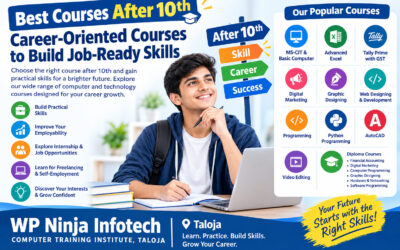
At WP Ninja Infotech, an MKCL Authorized Learning Center in Taloja, we provide practical computer and digital skills training for students, beginners, job seekers and working professionals.
Our courses include:
- MS-CIT
- Basic Computer Courses
- Advanced Excel
- Tally Prime with GST
- Digital Marketing
- Graphic Designing
- Web Designing
- Web Development
- Python
- AutoCAD
- Other IT and digital skill courses
Our focus is on practical learning so that students can develop useful computer and digital skills alongside their regular education.
Final Thoughts
Choosing what to do after 10th can feel difficult, but students have many options. Whether you choose Science, Commerce, Arts, Diploma, vocational education or a skill-based course, the important thing is to make an informed decision.
Understand your interests, identify your strengths, explore career options and develop practical skills that support your future goals.
If you are searching for career guidance after 10th pass, start by exploring your options instead of rushing into a decision. The right career path is one that matches your interests, abilities and long-term goals.
Frequently Asked Questions
1. What are the best career options after 10th?
There is no single best career option for every student. Options include Science, Commerce, Arts/Humanities, Diploma, vocational education and skill-based courses. The right choice depends on your interests, strengths and career goals.
2. Which courses can I do after 10th?
Students can explore diploma, vocational and skill-based courses such as computer applications, MS-CIT, accounting, graphic design, web design, digital marketing and programming, depending on their interests and eligibility.
3. Which computer courses are useful after 10th?
Basic computer courses, MS-CIT, MS Office, Advanced Excel, Tally Prime with GST, web designing, graphic designing, digital marketing and programming can help students develop practical digital skills.
4. Are job-oriented courses after 10th a good option?
Job-oriented and skill-based courses can help students develop practical skills. However, students should consider course quality, practical training, education requirements and long-term career opportunities rather than choosing a course only because it promises a job.
5. Can I learn computer skills while studying in 11th and 12th?
Yes. Students can learn computer and digital skills alongside their regular education. This can help them develop practical abilities before entering higher education or the workplace.
6. Should I choose Science, Commerce or Arts after 10th?
Choose the stream that best matches your interests, strengths and future plans. Students should not select a stream only because it is considered more popular or prestigious.
7. Is career guidance necessary after 10th?
Career guidance can help students understand their options, identify suitable fields and make a more informed decision about education and skills.
8. Where can I get computer training in Taloja?
WP Ninja Infotech provides computer and digital skills training in Taloja, including MS-CIT, Advanced Excel, Tally Prime with GST, Digital Marketing, Graphic Designing, Web Designing, Programming and other IT-related courses.
About WP Ninja Infotech
WP Ninja Infotech is an MKCL Authorized Learning Center in Taloja, Navi Mumbai, providing practical computer education and digital skills training for students, beginners, job seekers and working professionals.
Students can visit our center to learn more about available courses and choose skills that match their educational and career goals.